
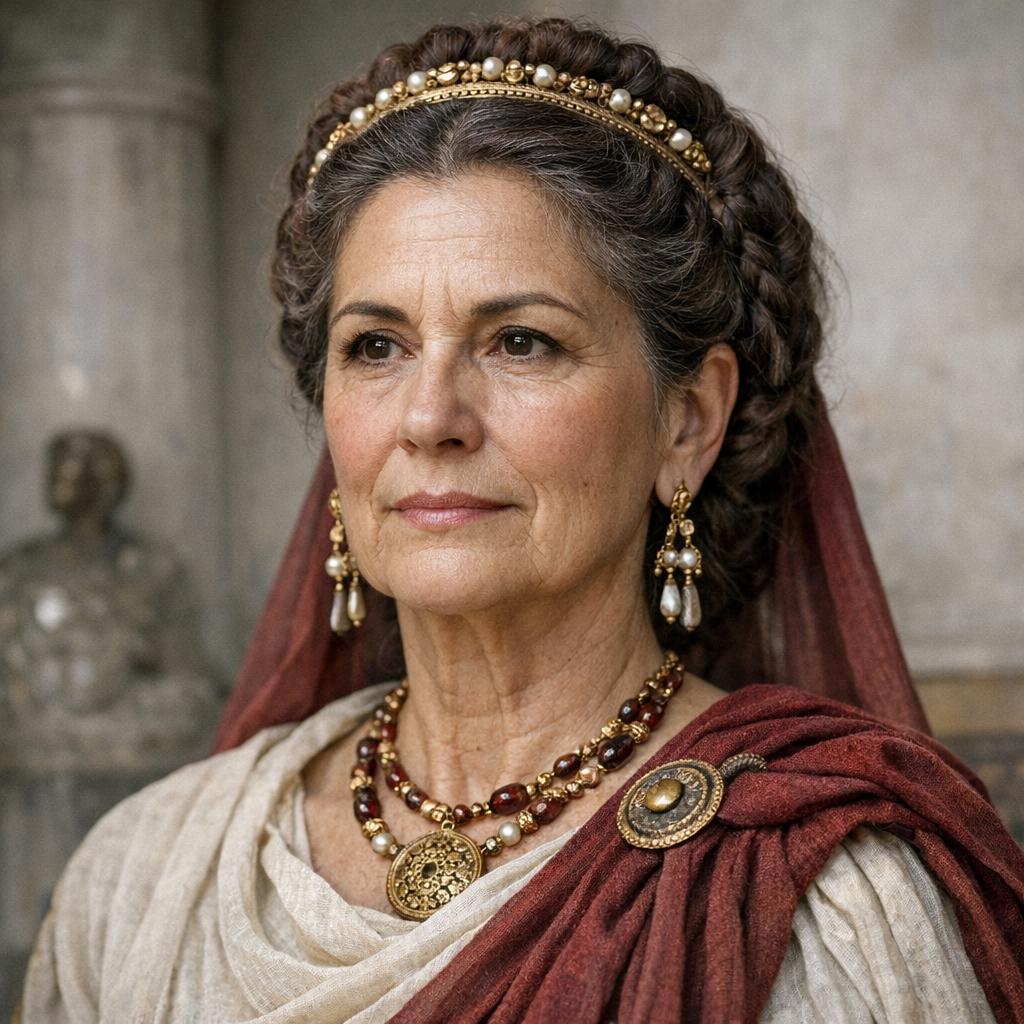
Aemilia Tertia
Born: c. 230 BC
Known for: Wife of Scipio Africanus.
Died: c. 163 BC
Age: 67
Allegiance: Roman Republic; Patrician gens Aemilia; Family of Scipio Africanus
Conflicts: Aemilia Tertia was famously known for her extraordinary "self-control" in the face of her husband’s adultery. According to ancient sources like Valerius Maximus, she discovered that Scipio Africanus was having an affair with one of their young female slaves.
Aemilia reportedly clashed with Scipio regarding the marriage of their younger daughter, Cornelia.
In her later years, Aemilia had to navigate the Lex Voconia, a law introduced in 169 BC that prohibited women of the highest wealth class from instituting other women as their heirs.
Cause of Death: The exact cause of death for Aemilia Tertia is not recorded in historical texts, but she is generally believed to have died of natural causes due to her advanced age. She passed away sometime around 163–162 BC, having outlived her husband, Scipio Africanus, and both of her sons.
Resting Place: Unknown, as there is no surviving historical record or archaeological evidence pinpointing Aemilia Tertia’s specific burial site.
Spouses: Scipio Africanus
Aemilia Tertia (d. 162 or 163 BC), properly Aemilia, was the wife of Scipio Africanus.
She was a member of the gens Aemilia, one of the ancient Roman patrician families, and the daughter of Lucius Aemilius Paullus who was consul in 219 and 216 BC. Paullus died in 216 at the Battle of Cannae and she married Africanus, then known only as Publius Cornelius Scipio, some time around the battle.
In life she was known for her ostentatious displays of wealth. Polybius, for example, noted in his narrative how Aemilia "display[ed] great magnificence whenever she left her house to take part in the ceremonies that women attend, having participated in the fortune of Scipio when he was at the height of his prosperity" before describing the large size of her retinue, gold and silver adorned carriage, and expensive sacrificial instruments. These ostentatious displays of wealth reflected high levels of status competition among the female members of the middle republican elite, especially in public religious rites – especially to Juno and Magna Mater – and in advertising politically for her family by organising prestigious marriages and public gatherings. She also assisted in suppressing news of Africanus' affair with one of their slave girls to protect his reputation; after Africanus' death, the girl was manumitted and married to one of their freedmen. She was provided some 300,000 denarii in Africanus' will as a usufructuary dower; she also arranged for Africanus' funeral mask to be installed at the Temple of Jupiter Optimus Maximus on the Capitoline Hill.
Aemilia died in 162 or 163 BC. The funeral was likely organised by Scipio Aemilianus, her main heir and adoptive son of her son Publius. Many of the precious instruments she had used for public religious rites were passed down in the Cornelian family, "memorial[ising] her and adorn[ing] her female relatives".
She is known to have had two brothers: Lucius Aemilius Paullus Macedonicus and Marcus Livius Aemilianus.
Aemilia bore four children with Africanus. There were two sons, Publius and Lucius: Publius was made augur in 180 BC; Lucius was praetor in 174 BC. They also had two daughters named Cornelia: the elder married Publius Cornelius Scipio Nasica Corculum and the younger married the consul of 177 BC, Tiberius Sempronius Gracchus.